
SERVICE 01
Climate Risk Assessment
Frontierra delivers location-specific climate risk assessments powered by satellite data, AI and geospatial analysis. Our platform identifies and quantifies both physical and transition climate risks across your assets, investments and supply chains, giving decision-makers the intelligence to build resilience, make better-informed risk decisions and meet regulatory obligations
Explore how we run climate scenario analysis across IPCC-aligned pathways, the regulatory frameworks our service supports - including ISSB, TCFD, EU Taxonomy and CSRD - and who this service is designed for.
Request a platform demo or get in touch to discuss your requirements.
PHYSICAL RISK
Physical Climate Risks
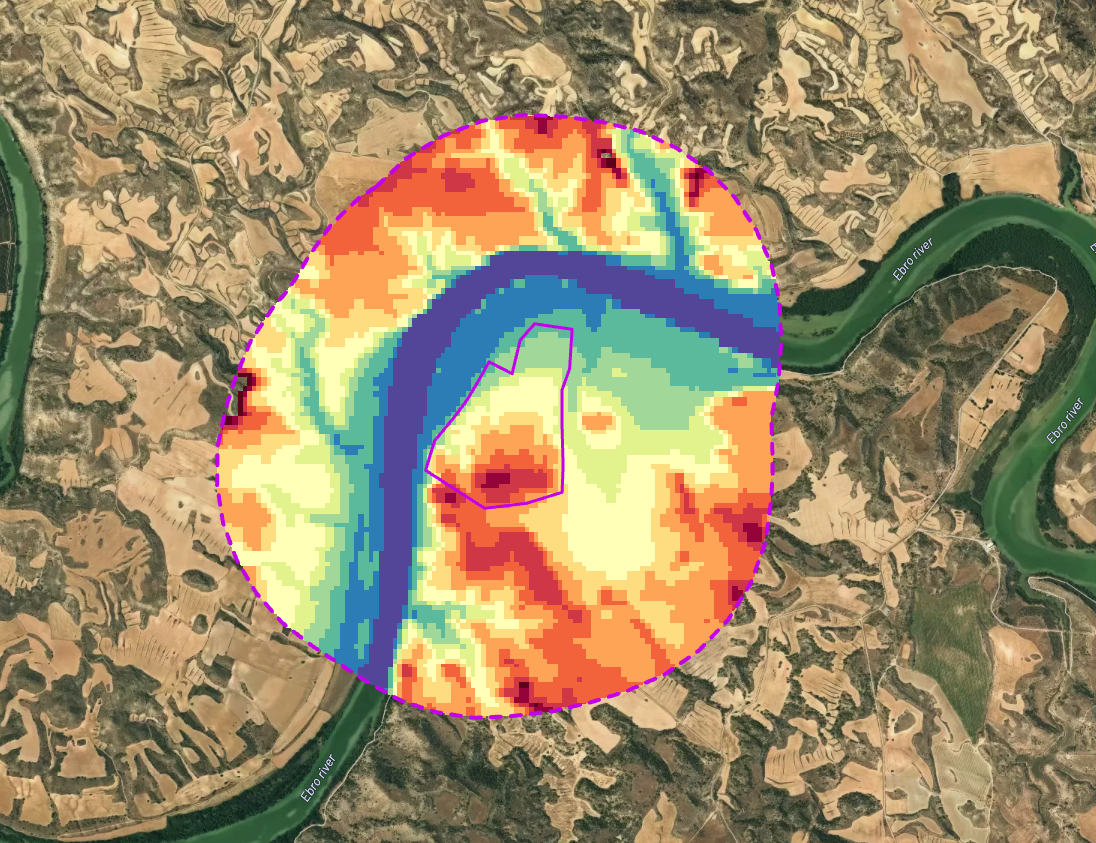
Physical climate risks arise from direct exposure to climate-related hazards. Frontierra's Climate & Nature Intelligence Platform evaluates over 35 hazard types across acute and chronic risk categories.
Each assessment is tied to the precise footprints of your assets, not a sector or regional average. This location-level precision sets Frontierra apart, and is what separates a meaningful climate risk assessment from a generic indicator. It is exactly what frameworks such as ISSB S2 and the EU Taxonomy's Climate Risk and Vulnerability Assessment (CRVA) requirements demand.
Acute hazards
Flooding, wildfires, tropical cyclones, extreme heat events, droughts and landslides
Chronic hazards
Rising temperatures, sea-level rise, changing precipitation patterns, water stress and ocean acidification
TRANSITION RISK
Climate Transition Risks
Climate transition risks emerge as economies and regulations adapt to a lower-carbon world.
Policy and regulatory risk
Exposure to evolving legislation such as the EU Taxonomy, CSRD and carbon pricing mechanisms
Market and reputational risk
Changing investor, customer and stakeholder expectations around climate performance
Stranded asset risk
Assets that may lose value as climate-related regulation or physical conditions shift
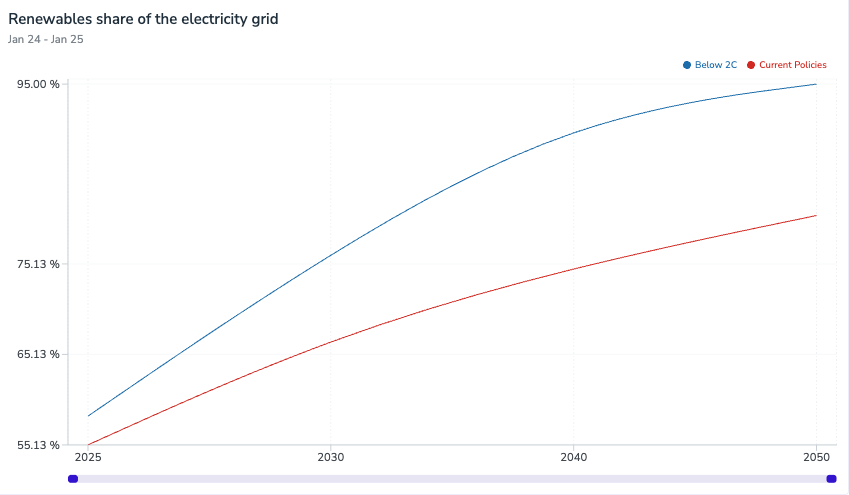
Frontierra assesses transition risk in the context of current and anticipated regulatory trajectories, helping clients identify which assets face the greatest exposure and enabling them to plan accordingly.
SCENARIO ANALYSIS
Climate Scenario Analysis
Climate scenario analysis models how risks evolve under different future warming pathways. It is a core requirement of ISSB S2 which was built on and supersedes TCFD, the framework that informed the design of most national climate disclosure regulations. ISSB S2 requires organisations to assess their exposure under at least two climate scenarios, including one consistent with a 1.5°C or 2°C pathway, and as a result now forms the basis of mandatory climate reporting in a growing number of jurisdictions.
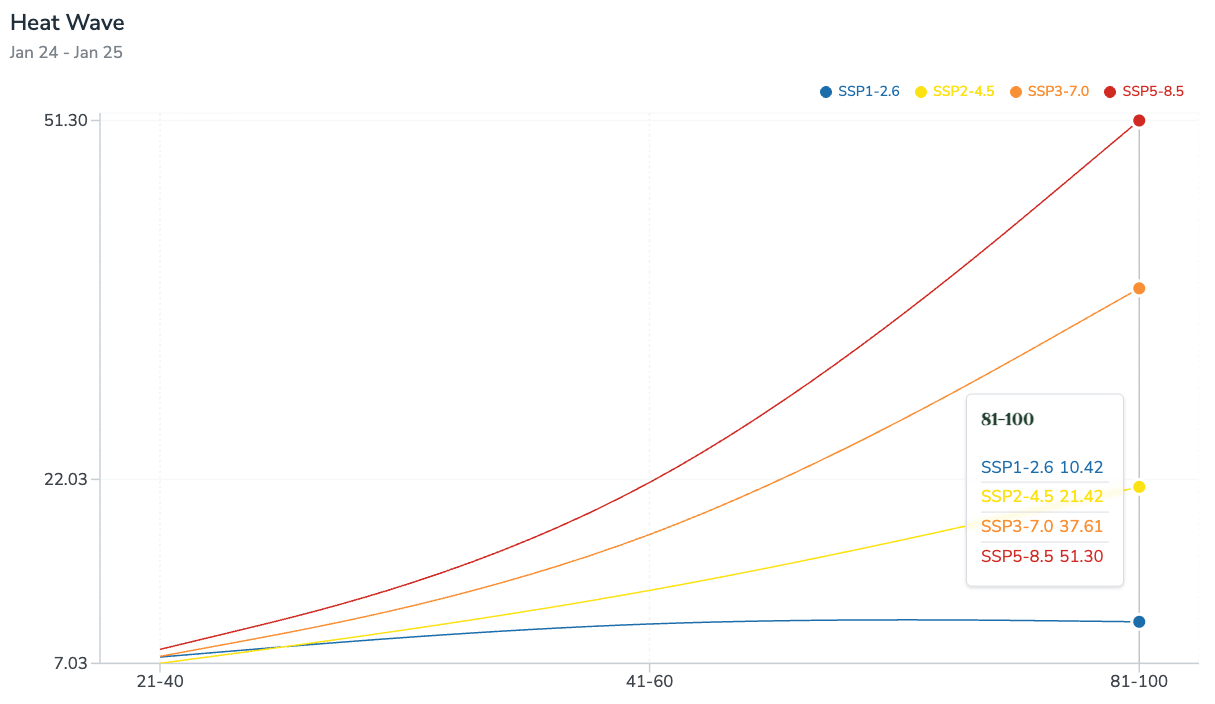
Frontierra runs scenario analysis using IPCC-aligned climate projections, including SSP1-2.6, SSP2-4.5, and SSP5-8.5, at the asset location level. Rather than applying sector-wide assumptions, our platform models how each specific site performs across multiple climate futures, surfacing which assets are resilient across scenarios and which face escalating risk under warming trajectories.
This granular, location-specific scenario analysis supports the disclosure and decision-making requirements of ISSB, TCFD and EU Taxonomy at both the asset and portfolio level.
Get in touch to find out how Frontierra's scenario analysis can support in stress-testing the resilience of your assets and portfolios under different climate scenarios.
COMPLIANCE
Frameworks, Standards and Regulations
Frontierra's climate risk assessment service is designed to support disclosure and compliance requirements of multiple climate-related frameworks.
ISSB / IFRS S2 / TCFD
IFRS S2 is the global baseline standard for climate-related financial disclosures, developed by the ISSB, consolidating and superseding the Task Force on Climate-related Financial Disclosures framework (TCFD). A growing number of jurisdictions, including the UK, Australia, and others, have adopted or are in the process of adopting ISSB S2-aligned mandatory disclosure requirements.
IFRS S2 requires entities to disclose information about climate-related risks and opportunities, including scenario analysis and quantitative risk metrics. Outputs from Frontierra's Climate & Nature Intelligence Platform are structured to support ISSB-aligned reporting.
EU Taxonomy
The EU Taxonomy's do no significant harm (DNSH) criteria require a Climate Risk and Vulnerability Assessment (CRVA) for many eligible economic activities. Frontierra's platform is built to deliver CRVA-standard outputs, including forward-looking scenario analysis across the required hazard categories.
CSRD / ESRS E1
The Corporate Sustainability Reporting Directive requires large companies to disclose climate-related risks and their financial impacts under ESRS E1. Frontierra's climate assessments provide the underlying data and analysis required to complete these disclosures.
Paris Agreement
The methodologies used to demonstrate Paris Alignment require that material climate risks are identified and assessed. Frontierra's location-specific physical risk analysis provides the evidence base required to satisfy this core component of demonstrating Paris alignment.
SEC Climate Disclosures
For organisations with SEC reporting obligations, Frontierra's physical risk analysis supports disclosure of material climate-related risks, consistent with the SEC's climate disclosure requirements.
CLIENTS
Who This Service Is For
Frontierra's climate risk assessment service is designed for organisations that need to systematically identify, assess and prioritise climate-related risks.
Financial institutions
Asset managers, banks and insurers conducting pre-investment due diligence, portfolio-level risk screening and mandatory ISSB or CSRD reporting
Corporates
Businesses with CSRD, ISSB or TCFD disclosure obligations requiring location-level physical and transition risk data across their operations or supply chains
Real asset developers
Project teams assessing site-level climate hazard exposure to proactively mitigate risk, meet investor requirements and plan for long-term asset resilience
Related Climate Services
Climate risk does not exist in isolation. Frontierra's platform integrates climate and nature risk within a single assessment - covering both exposure to nature-related risks and opportunities for nature-positive practices across your assets. For organisations with complex global supply chains, our value chain mapping service traces climate and nature risks to their source - identifying where in your supply chain exposure is highest.
Frequently Asked Questions
-
A climate risk assessment identifies how climate-related hazards could affect a specific asset, portfolio or business operation. It covers physical risks - direct exposure to flooding, heat, drought and other hazards - and transition risks arising from regulatory change and the shift to a lower-carbon economy. Frontierra's assessments are location-specific, providing greater accuracy than sector or country-level averages.
-
Climate scenario analysis models how risks evolve under different future warming pathways. Climate standards and disclosure frameworks typically require organisations to assess their exposure under multiple scenarios. Frontierra runs this analysis at the asset location level, enabling clients to understand which assets are more or less exposed under different futures - not just today's climate conditions.
-
A CRVA is the specific assessment required to demonstrate that an economic activity has suitably considered all physical climate risks. It requires screening against a defined list of physical climate hazards across current and future climate scenarios. Frontierra's platform is designed to deliver CRVA outputs that meet EU Taxonomy requirements.